The day Gaddafi was killed: fifteen years on
Originally written in 2016. Updated October 2026.
It was morning in Tripoli, 20 October 2011. Even though it was autumn, I remember the heat outside. Entering the airport terminal, it was even hotter. I had been in Tripoli for most of the past six weeks. Long hours, little rest. In a few hours I would be in Malta for a break. The promise of an ice-cold lager beckoned. I just had to make it onto my flight.
It took us nearly thirty minutes to make our way from the terminal entrance to the check-in counter; clambering over luggage, stepping over sleeping families, waiting in non-existent queues.
Although a little agitated by the journey across the terminal, I immediately relaxed upon reaching the counter. My World Food Programme colleague, who was managing the United Nations Humanitarian Air Service, greeted us with a smile and checked us in. The UN flight was, for us, the only safe way in or out of Tripoli. The road to the Tunisian border was unsafe because of sporadic gunfights. To the east, the bloody battle for Sirte, on the Gulf of Sidra, raged on. Gaddafi loyalists remained surrounded in one of the town’s districts.
I stood patiently at the counter, boarding pass in hand, waiting for my colleague to check in. I would be in Malta soon.
I looked around me. The familiar discordant sounds of a crowded terminal dropped away. People bent over phones, speaking softly, whispering. Out of sight, someone started shooting just outside the terminal doors. The militia weren’t reacting to the shots, nor were the waiting passengers. I was a little nonplussed.
Then, almost in unison, men started to chant “Allahu Akbar,” over and over again. A woman started to ululate. Like a ripple, others joined in until it became a crescendo. I ignorantly assumed ululation was a sign of sorrow; I had much to learn about Libya.
The sound of weapons being fired, sporadic at first, added to the cacophony. The tempo of gunfire increased, and it did not stop. All I could hear now was the constant crack of AK-47 fire and heavy machine guns outside. In the years afterwards, I often wondered why so many people at the airport had guns, and why I had been somewhat okay with this.
WFP colleagues quickly told us to move to the business terminal, a small building across the road. We did not know what was happening, nor did the other non-Arabic speakers. As we crossed, my ears were ringing before I even realised that the militiamen parked on the apron were firing their weapons into the air.
I took shelter with my UN colleagues inside the terminal. It had the same glass windows and plasterboard walls as the main building. Years of smoke and dust stained the walls; rectangular patches of white marked where portraits of Muammar Gaddafi had hung. We stood away from the windows. There wasn’t much protection from stray bullets.
What was going on?
News filtered in, slowly at first. We were told Gaddafi had been killed in the battle for Sirte. Then came the clarification: it was the Gaddafi. Colonel Gaddafi.
A Libyan man looked at me, expressionless. He told us the rumour could not be true. He would only believe it if he saw the body with his own eyes. Gaddafi was too clever, he said. Too cunning.
For hours we waited for our plane to arrive from Malta. I recall being told it was circling off the coast. Although heavy weapons firing into the sky occasionally punctuated our conversations, I continued to tell myself the flight would arrive.
The WFP flight controller was in contact with the inbound aircraft. I could not hear the conversation, but watching his face, I knew the company contracted to fly us in and out of Tripoli had turned the plane around. Gunfire, airports and commercial aircraft don’t mix. This should probably have occurred to me earlier.
Along with my UN colleagues, I continued to shelter inside the business terminal. We were told the airport was now closed to international air traffic. Road movement in the city was assessed, at least for now, as unsafe. Gunfire could be heard across the capital.
That afternoon, Mahmoud Jibril, the National Transitional Council’s prime minister, confirmed that Gaddafi was dead.
“It’s time to start a new Libya, a united Libya,” he said. “One people, one future.”
Eventually, it was decided that we would need to drive back through Tripoli to the UN compound at Palm City Residences, west of the capital. We climbed into our armoured Toyota Land Cruisers. The armour offered some protection, but these were heavy vehicles, difficult to manoeuvre and requiring a longer braking distance. Hardly ideal for driving through crowds. The last thing the UN needed to do was kill a pedestrian on the day Gaddafi was killed.
We set off in convoy. Windows and doors locked. We were under instructions not to open them.
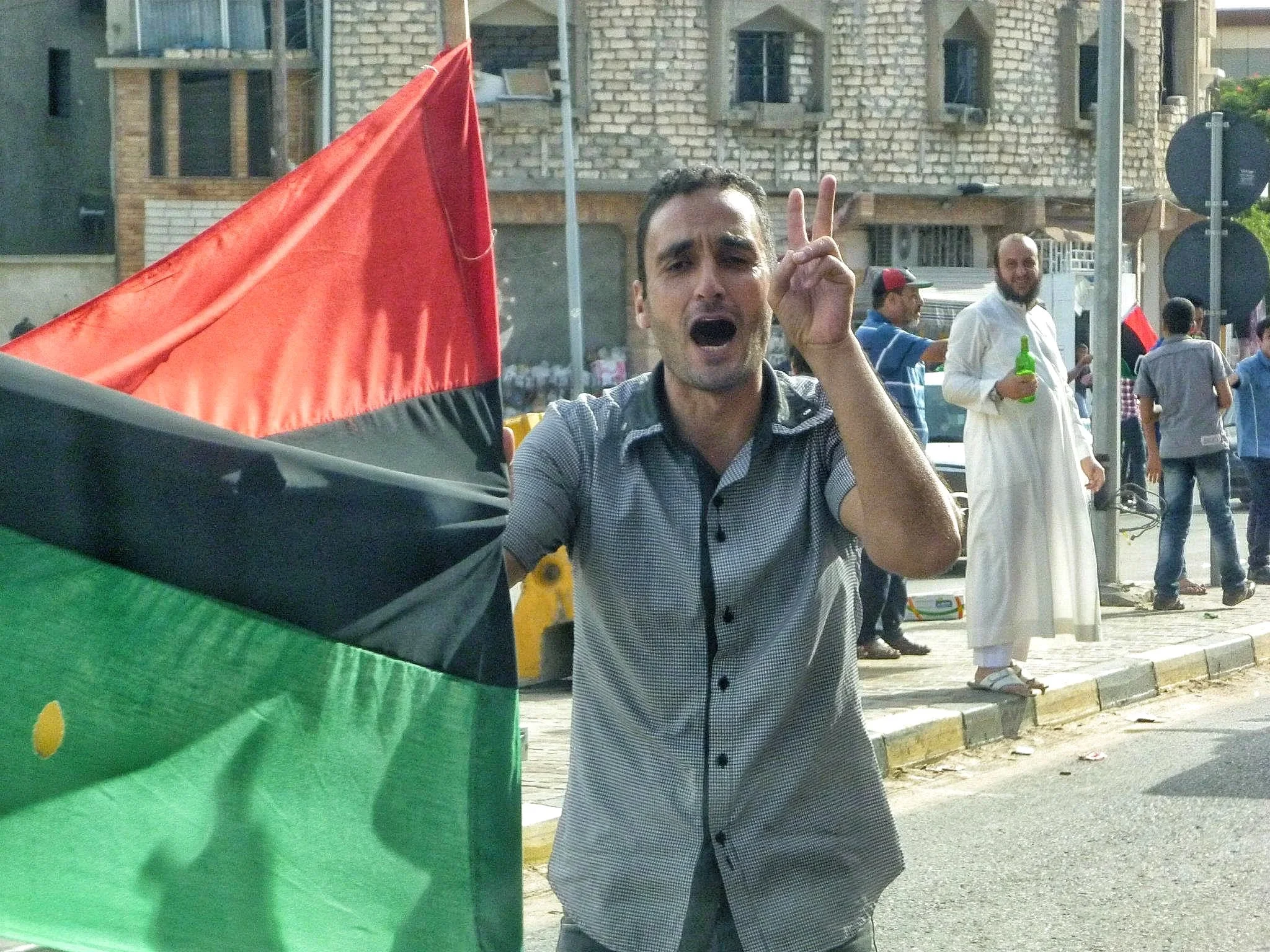
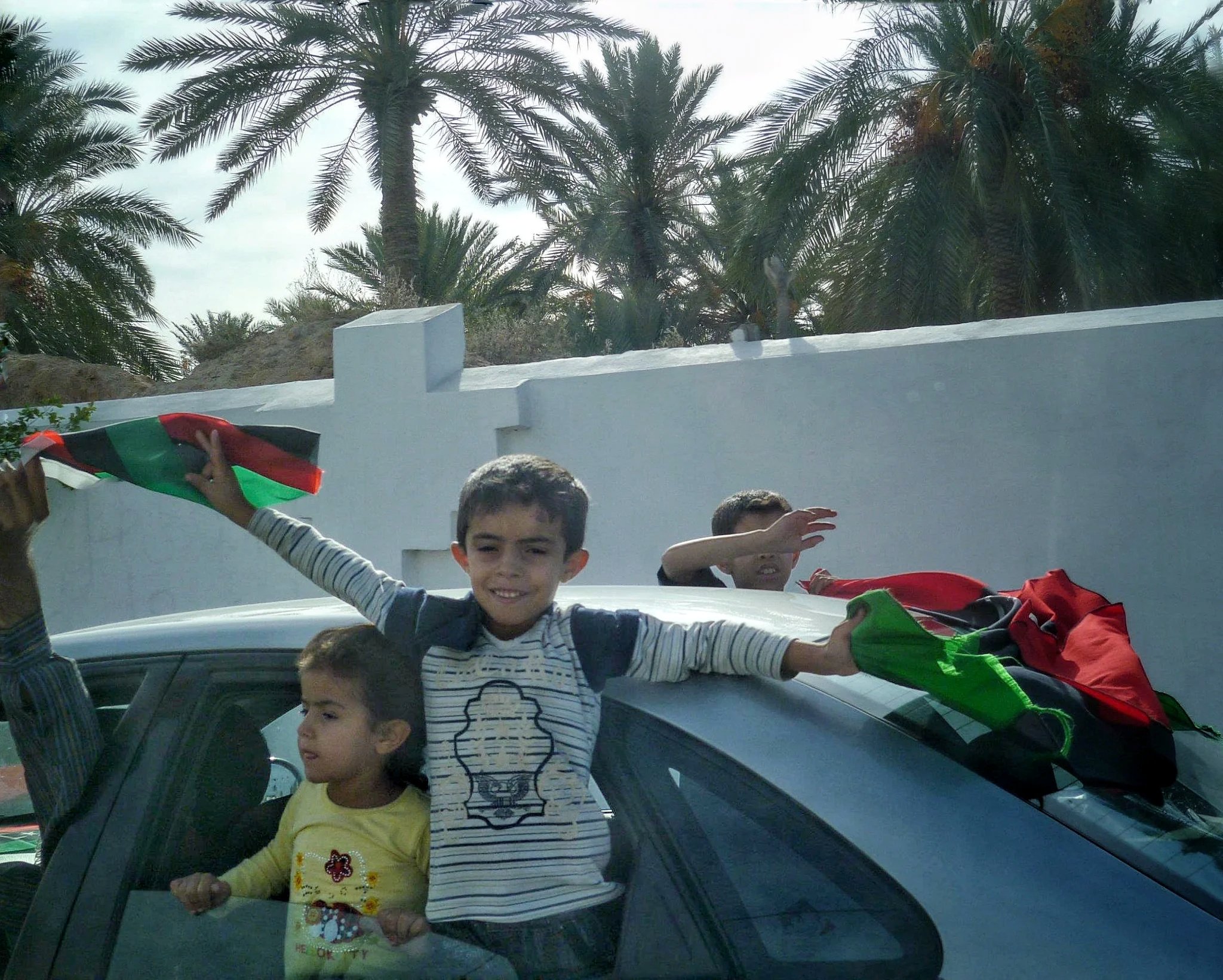
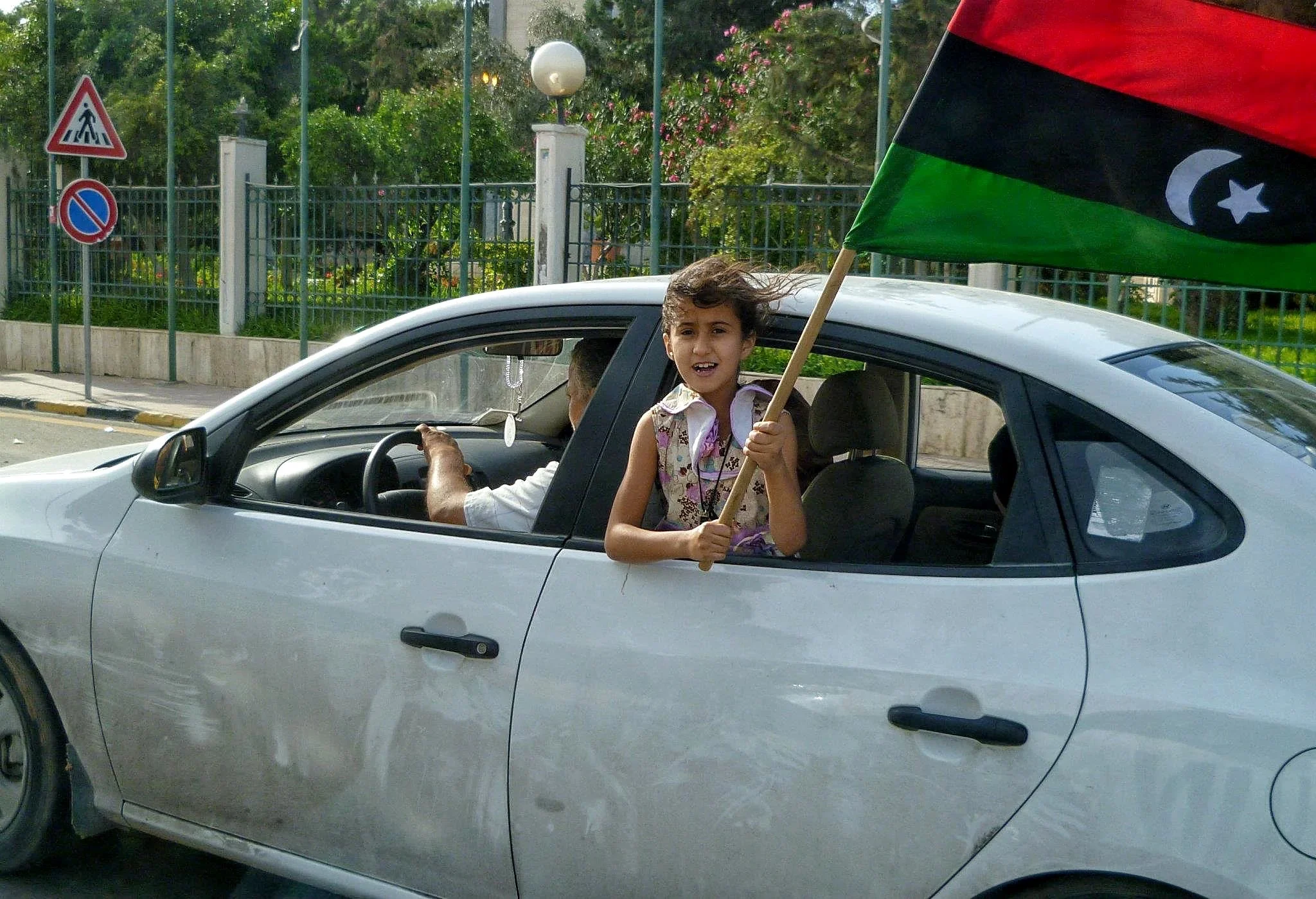
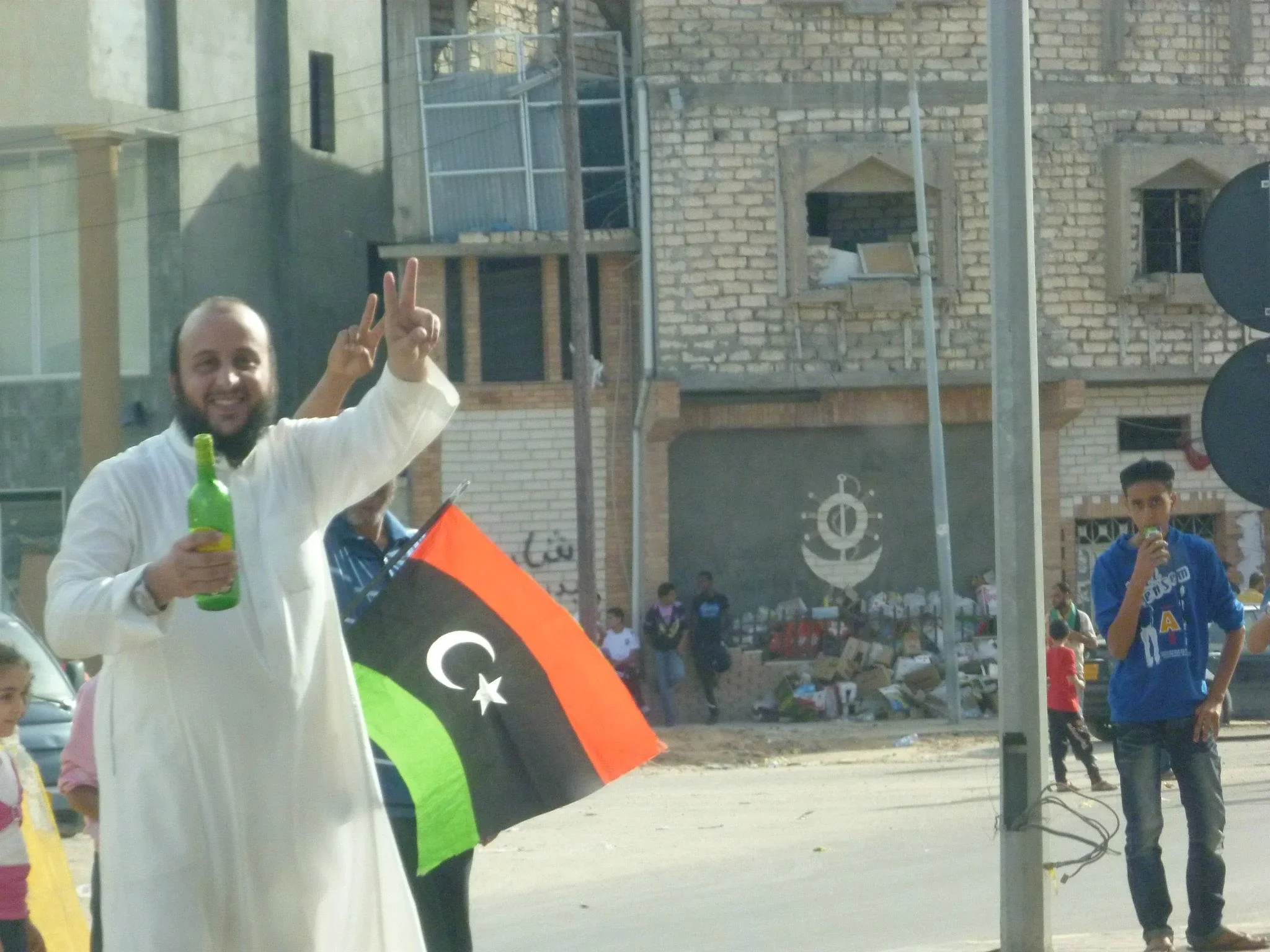
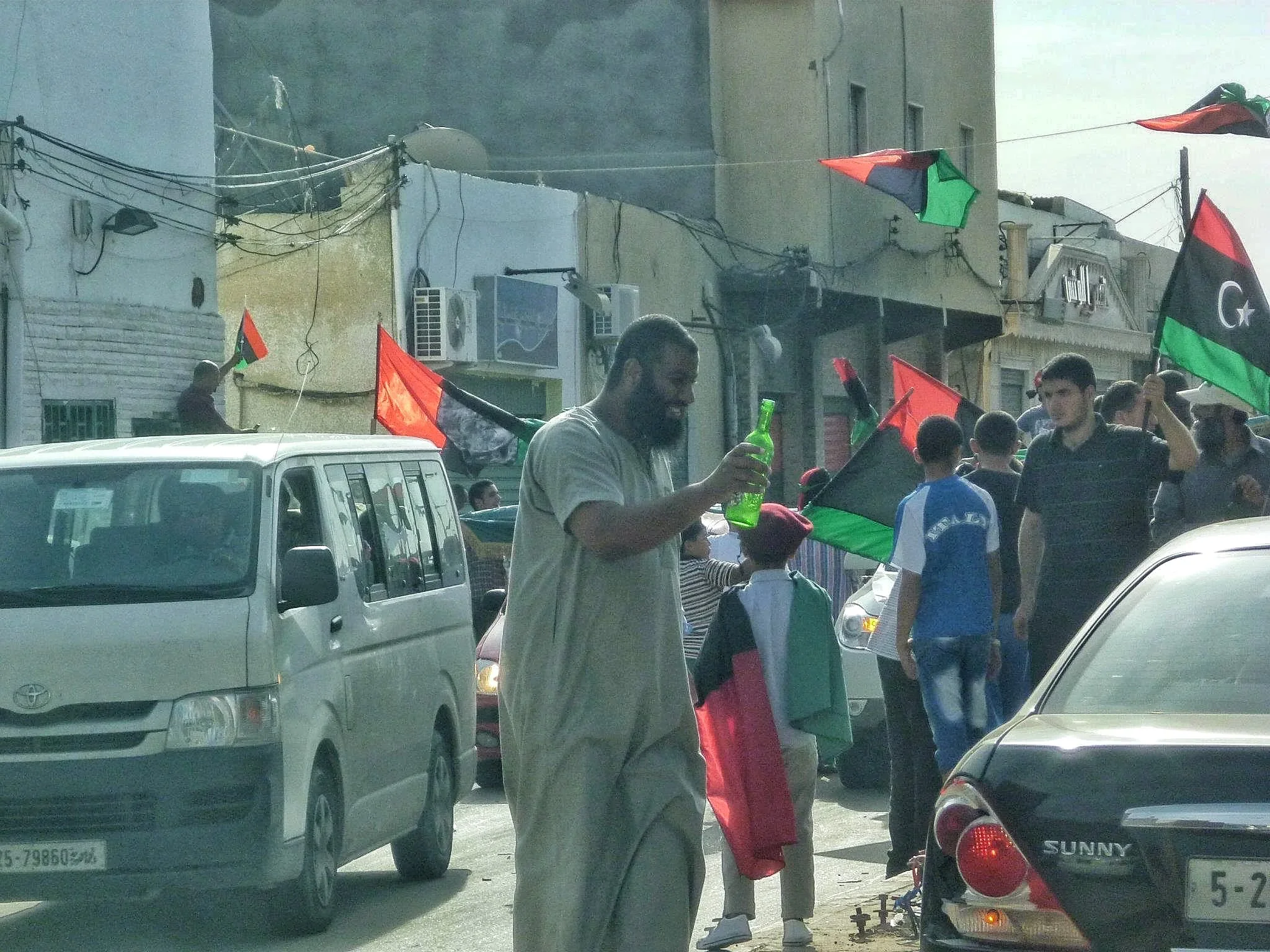
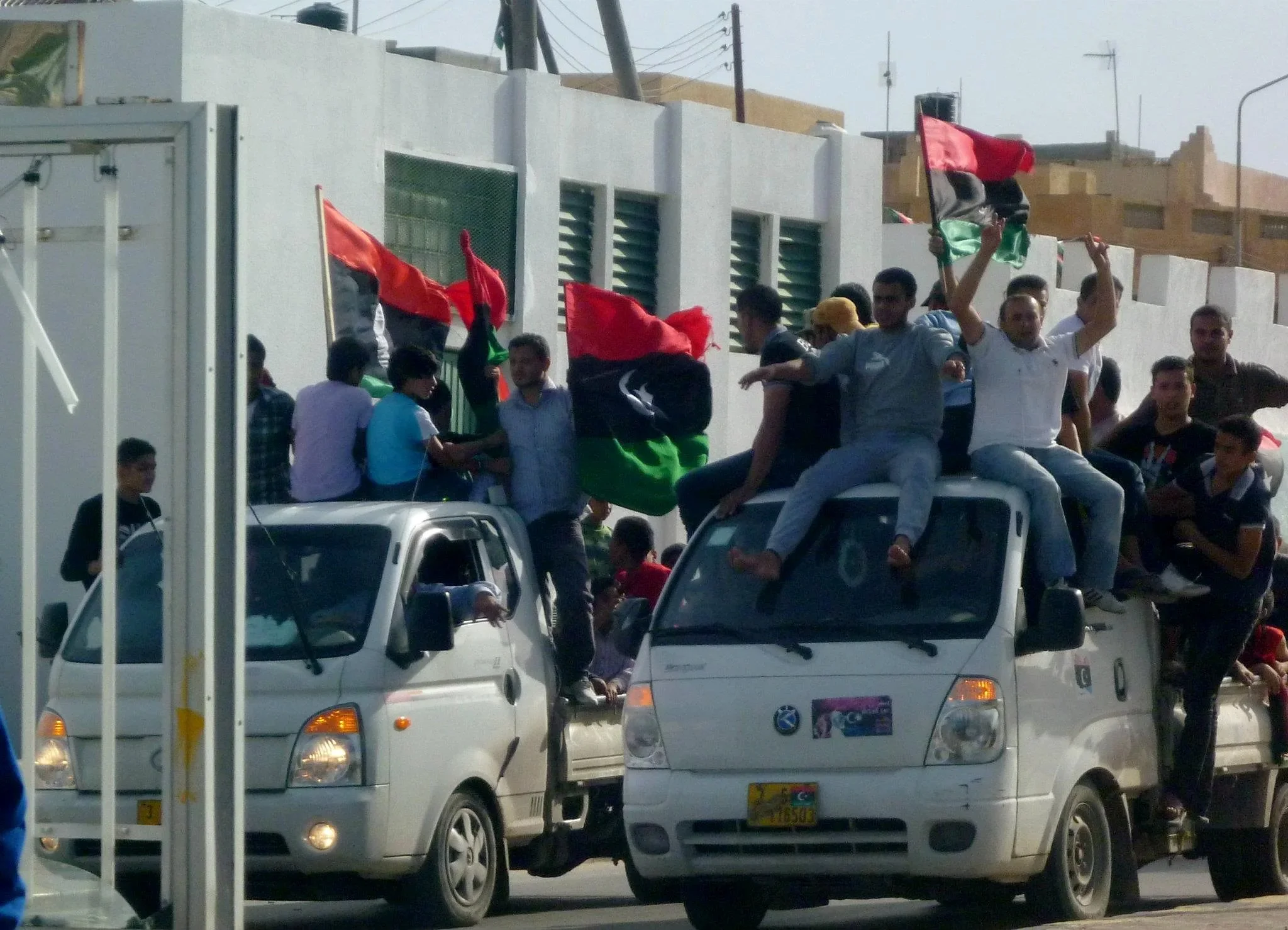
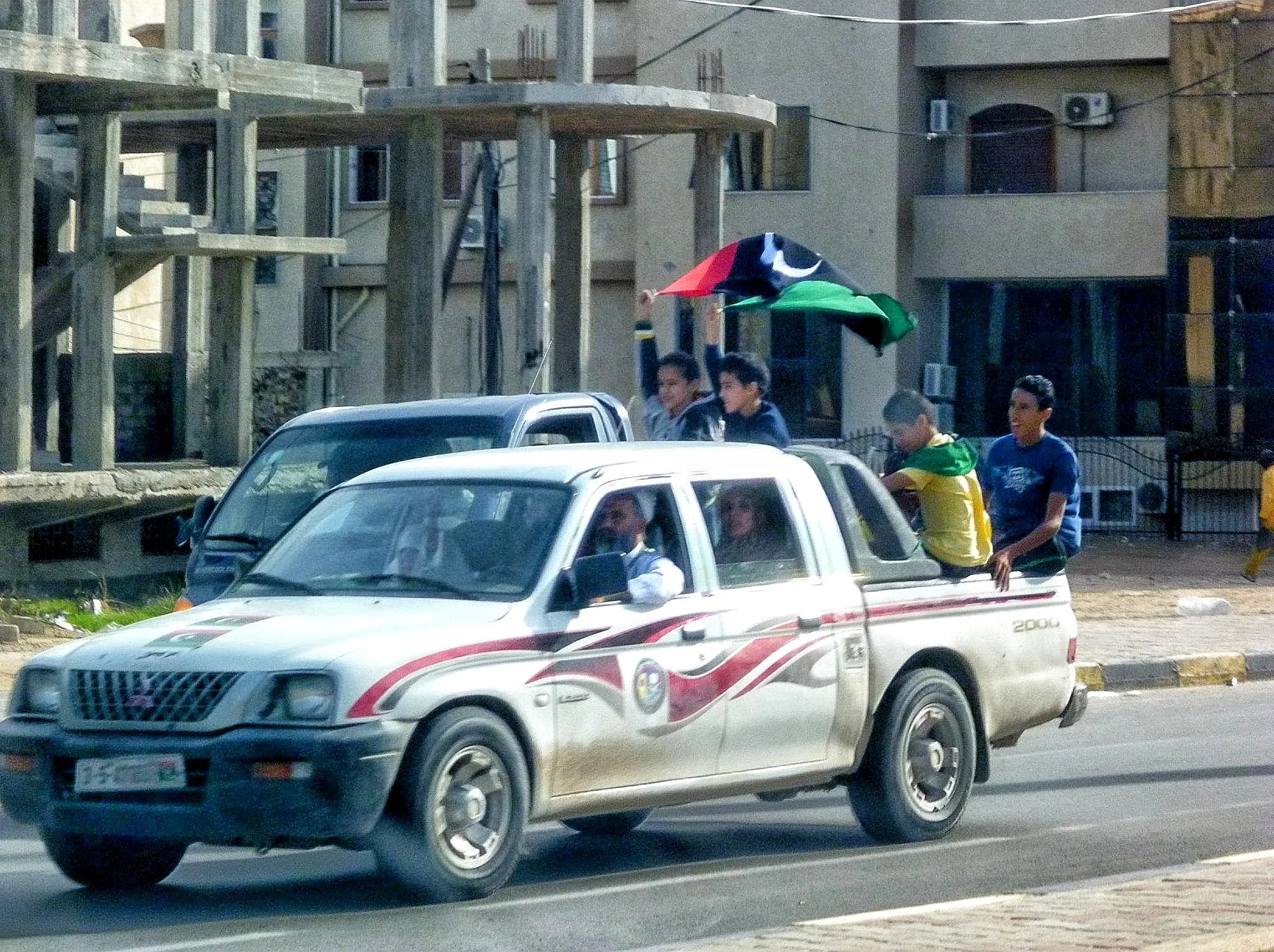
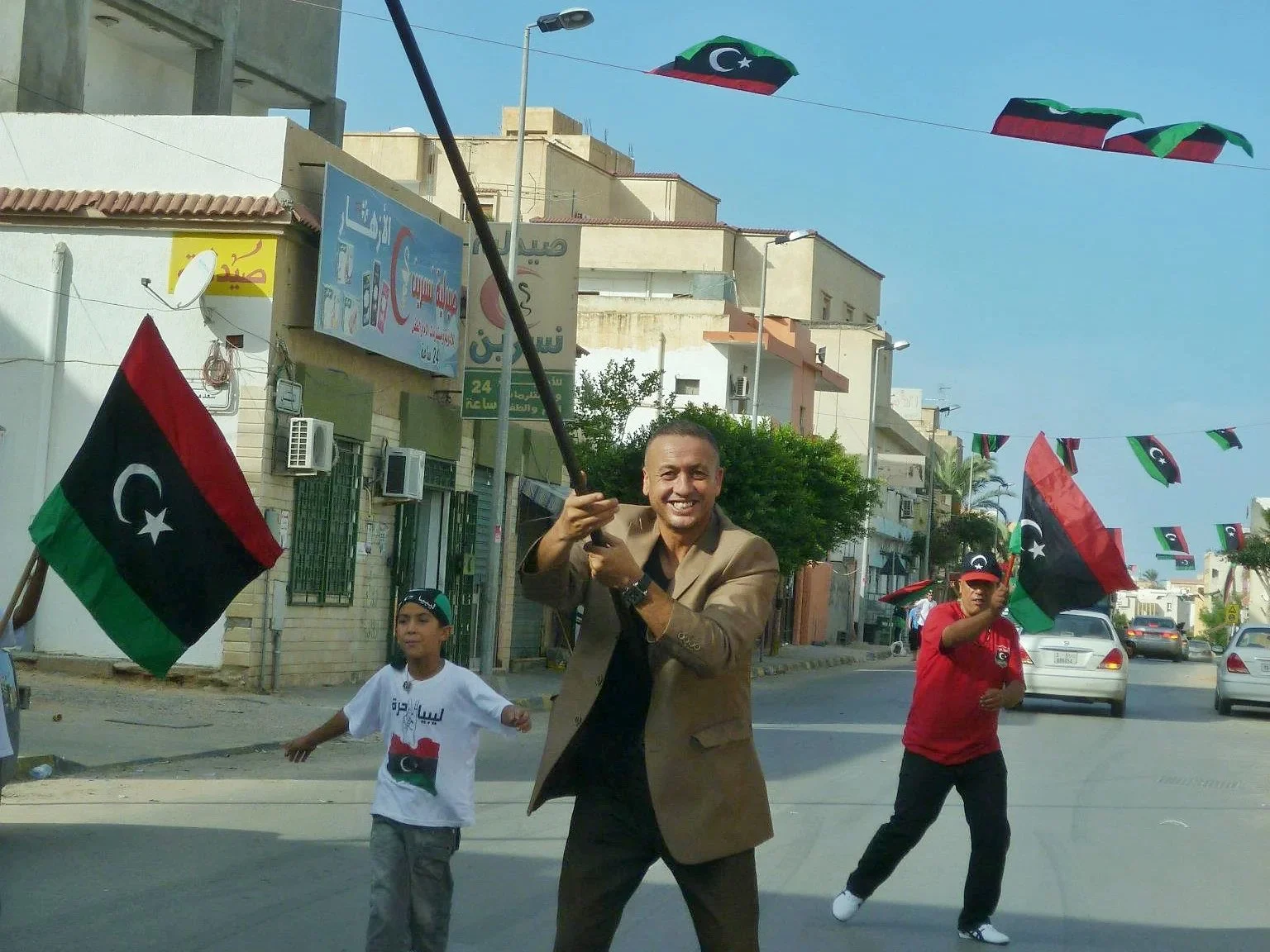
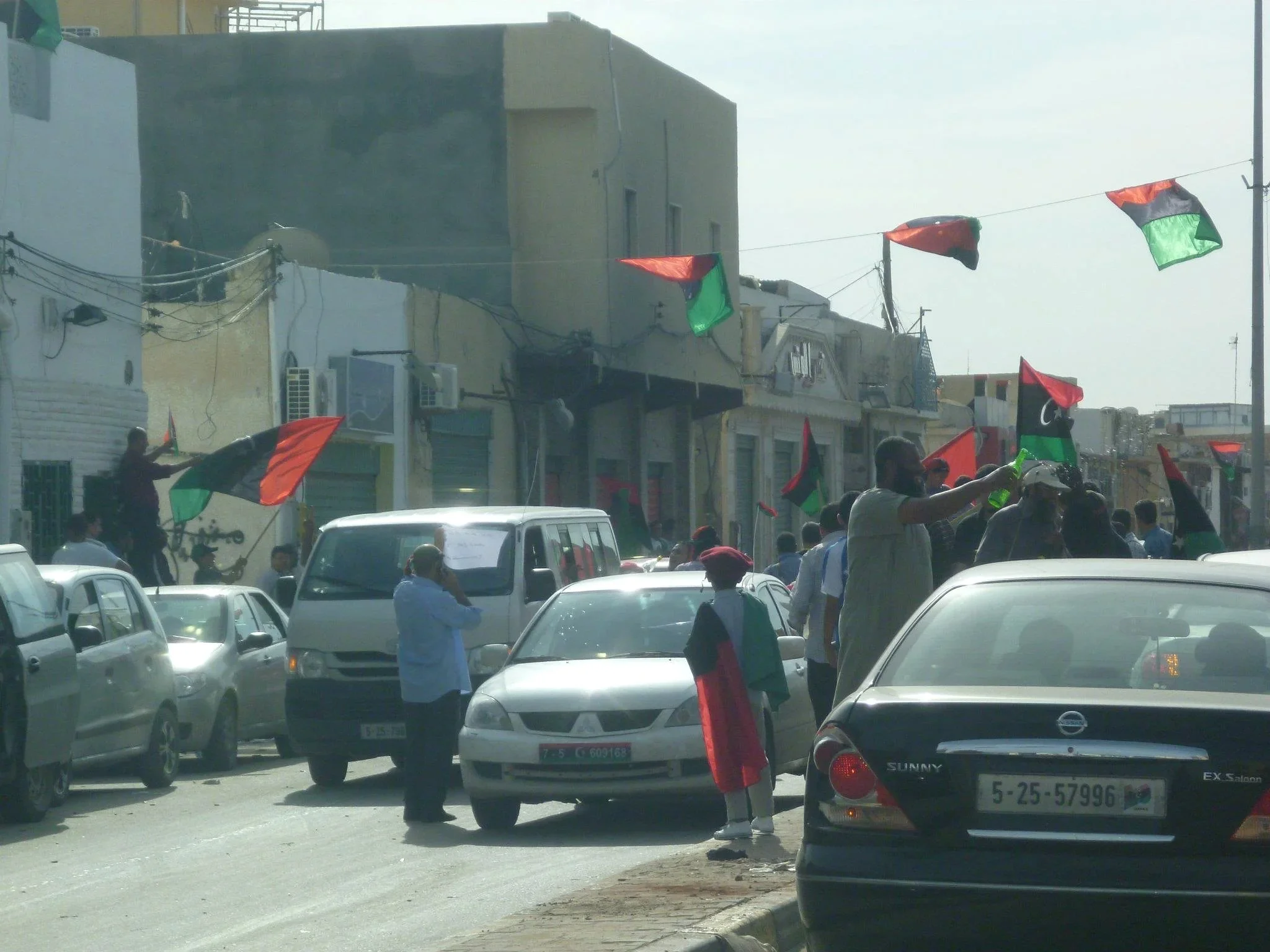
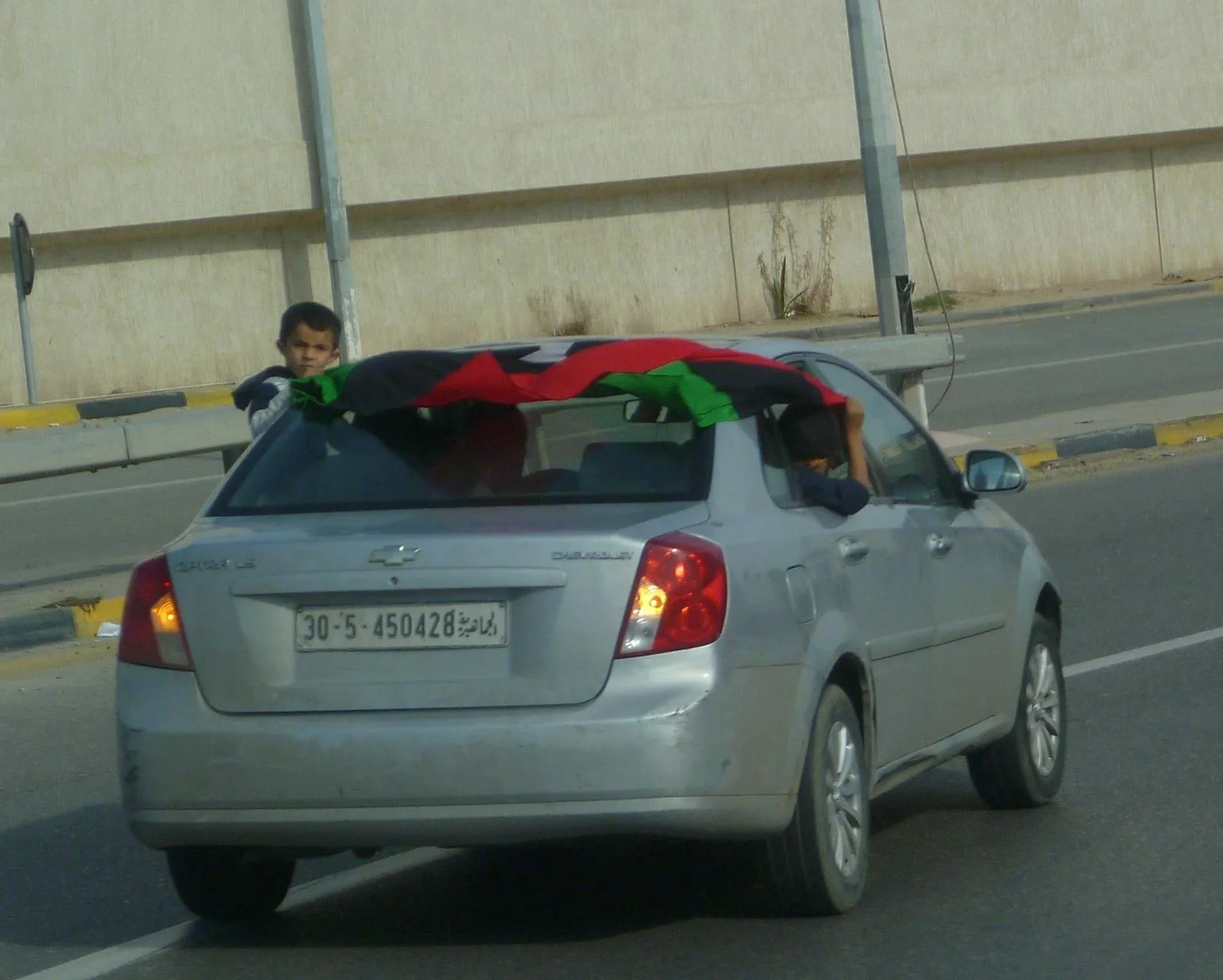
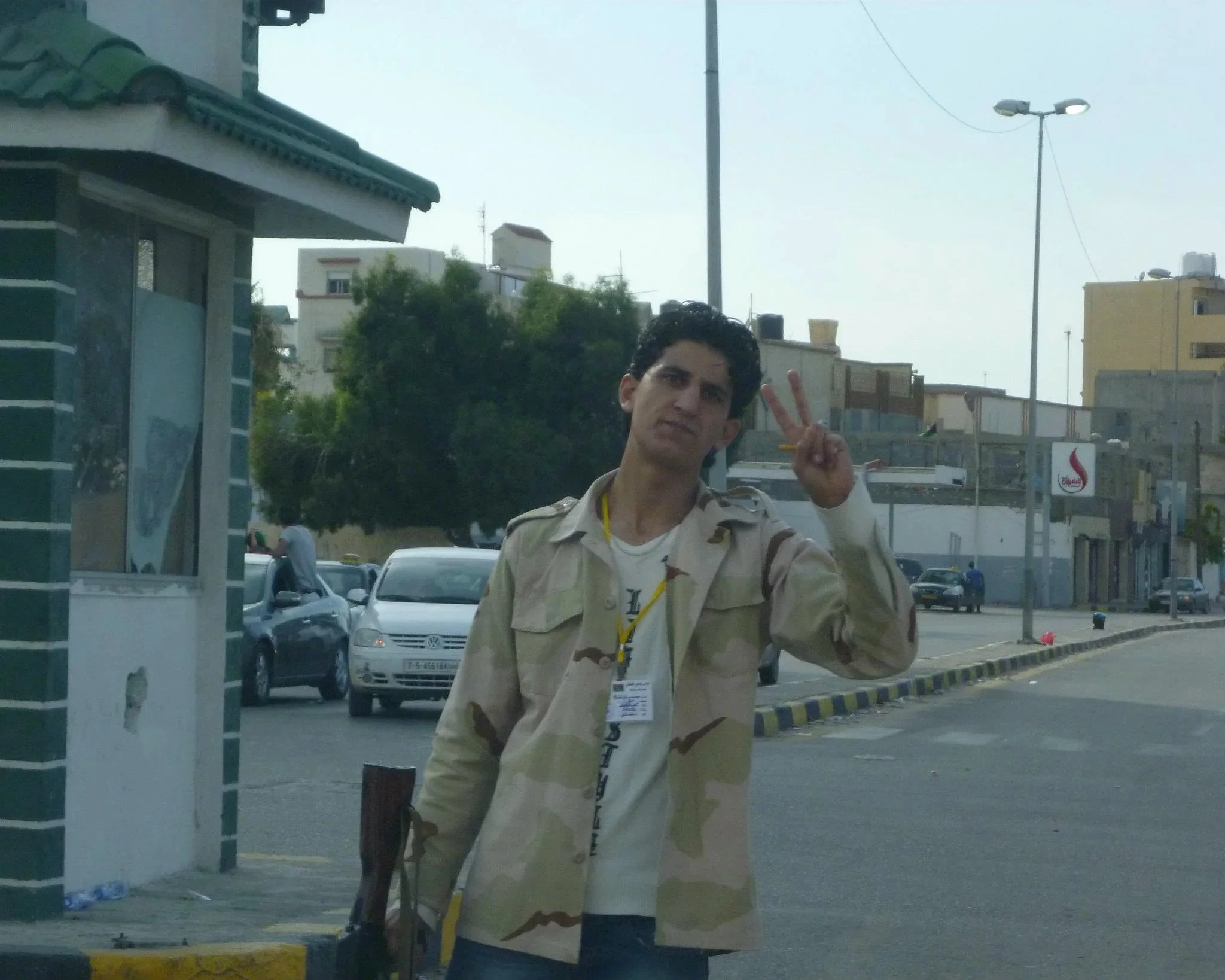
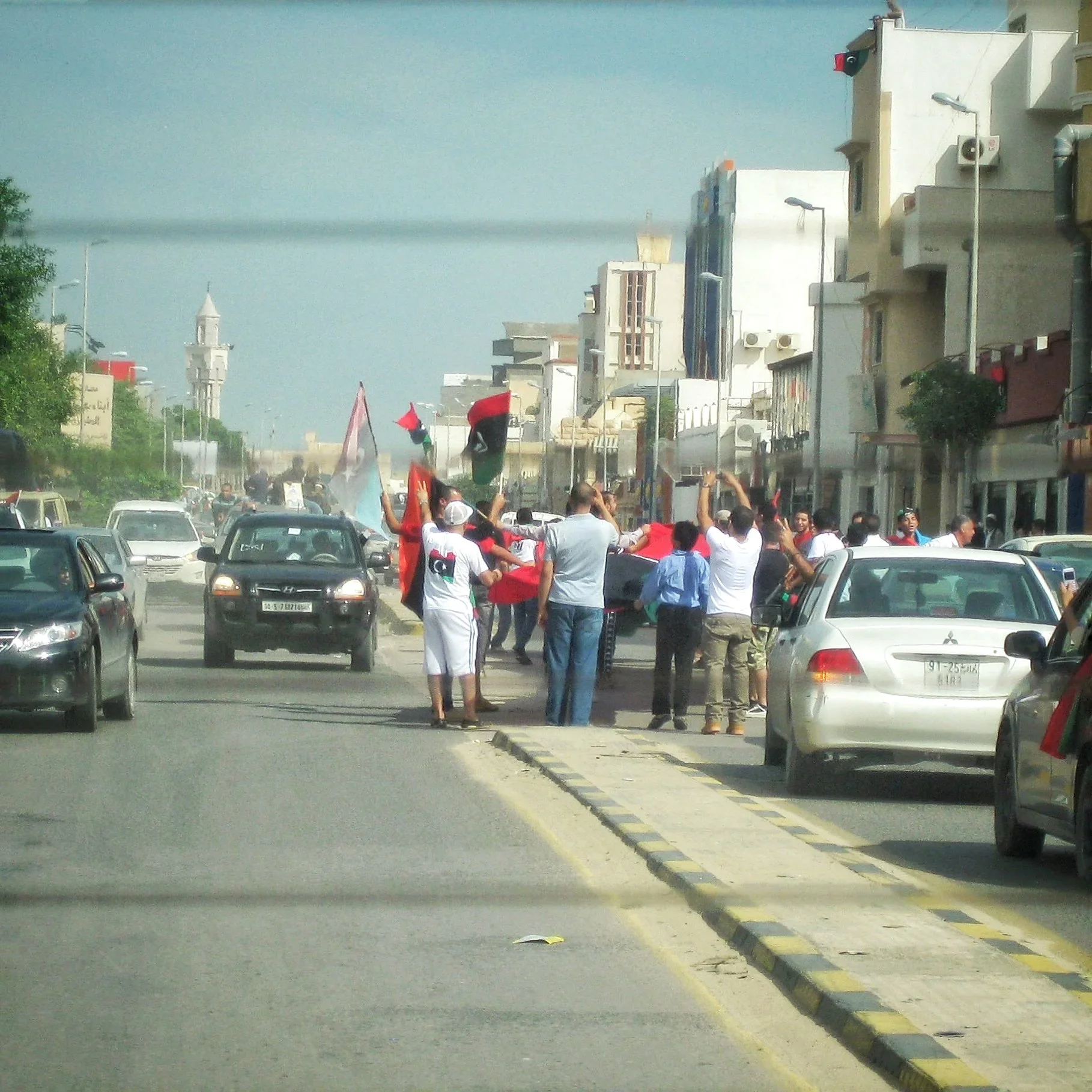
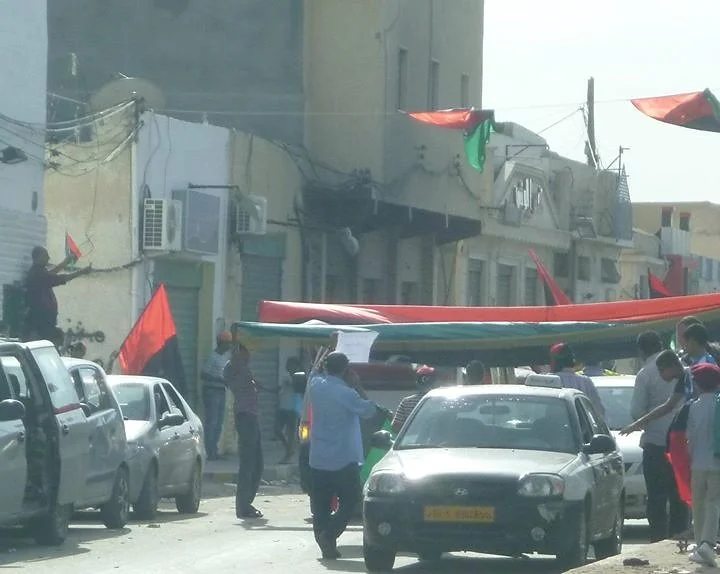
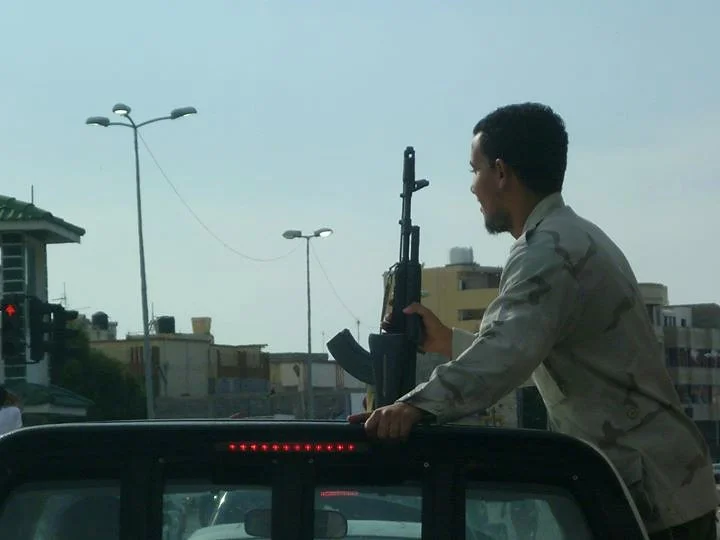
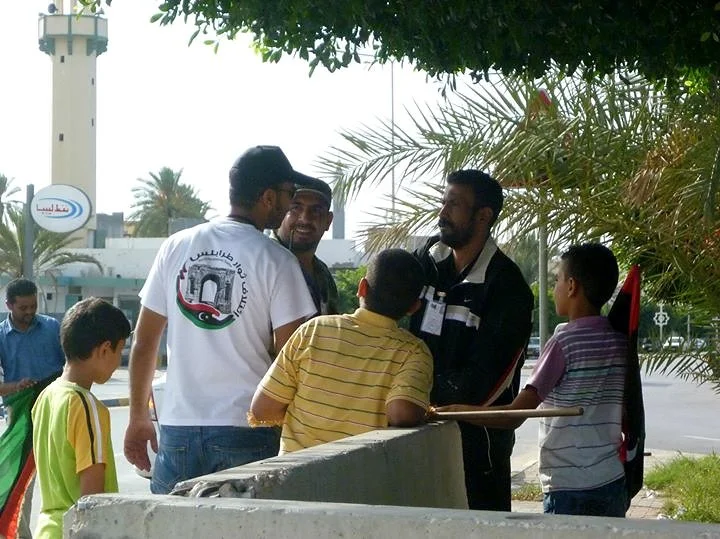
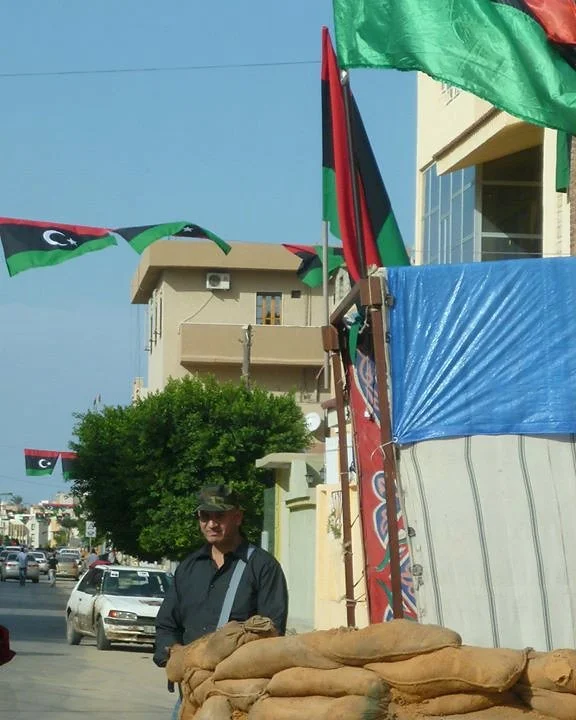
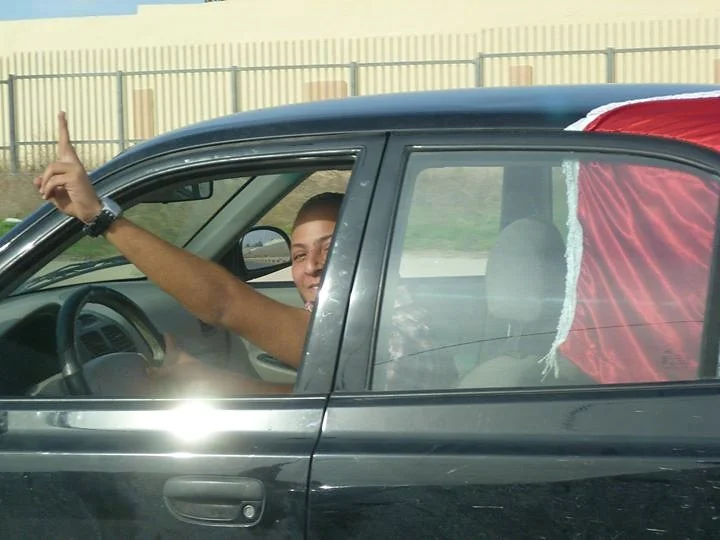
That drive back from the airport, through a city somewhat controlled by revolutionaries and the people, remains one of the most surreal experiences of my life. The red, black and green flag of the revolution was everywhere. Open trucks packed with young men in fatigues, draped in flags, drove through the streets. People were dancing. A man desperately wanted us to accept his offer of rose water, a traditional offering for guests. Children watched the impromptu celebrations in awe.
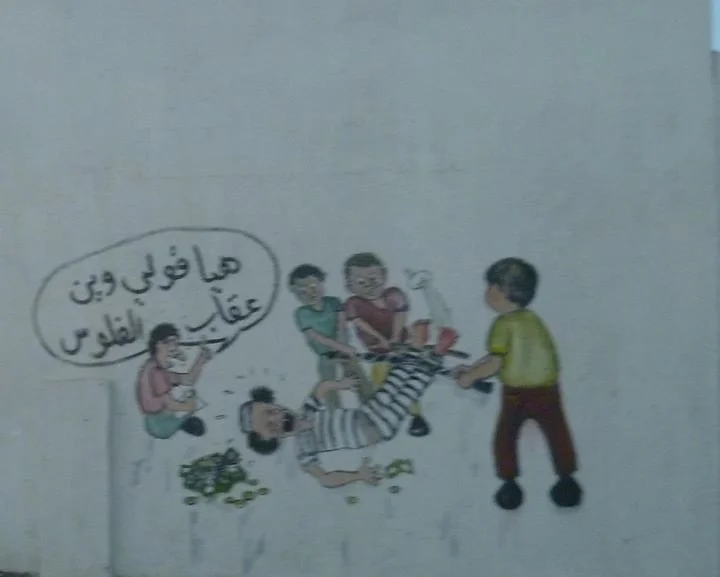
Variations on these scenes were everywhere.
My words couldn’t fully describe that day when I first wrote about it. Nor could the photographs I quickly snapped through the window as we drove through the joyous crowds. It seemed to me that a yoke had been lifted and, for a moment, anything was possible. A future, free and bright.
After about an hour we made it back to the compound, safe and drained. Over dinner, Gaddafi’s death and the future of Libya and its people were all we talked about. Even though we knew the road ahead would be rocky, optimism ruled over pessimism that night.
The next morning, we returned to the airport. Check-in was uneventful. While we waited for our flight, a Libyan man approached me. Pulling out his phone, he showed me graphic photographs of Gaddafi’s bloodied body. He told me he had driven to Misrata overnight and waited in line to see the dead dictator.
I was lost for words.
Fifteen years later
When I first wrote this account in 2016, I ended with a question: what happened to the Arab Spring?
Five years had passed, and the memories were already clouded by sadness at the opportunities lost. Another ten years have now gone by. Libya’s rival authorities remain divided between east and west. The national elections planned for December 2021 did not take place.
There has been movement. An agreement signed in August 2026 set out further steps towards national elections. In October, the UN reported political progress while warning that divisions within the country’s institutions, including its judiciary, continued to threaten the process. These efforts matter. So does the length of time Libyans have been waiting.
I would be wary now of letting the question about the Arab Spring stand as the whole conclusion. It is too broad to account for the people in those streets, or for the decisions made in the years that followed. It also lets too many people disappear into the wording. Political leaders made choices. Armed groups held on to power. Foreign governments pursued their interests. Ordinary Libyans lived with the consequences.
From behind the window of an armoured vehicle, I saw only a small part of Tripoli that afternoon. I could describe the celebrations. I could not know what each person expected, or what they would later lose.
The children watching those celebrations are adults now. Fifteen years is a substantial part of a life to spend waiting for the future people were celebrating.
I have left the optimism in this account because it belongs there. We did not sit around the dinner table that night knowing how the next fifteen years would unfold. Nor did the people dancing in the streets.
The sadness comes from reading what I wrote about a future, free and bright, and knowing how much of it remains unfinished. Somewhere in those photographs is a man offering us rose water through a closed window.
I wonder what became of him.

This work is licensed under a Creative Commons Attribution-NonCommercial 4.0 International License. Contact me for commercial use.